Exploring the Rich Heritage of Holy Trinity Russian Orthodox Church in Karakol
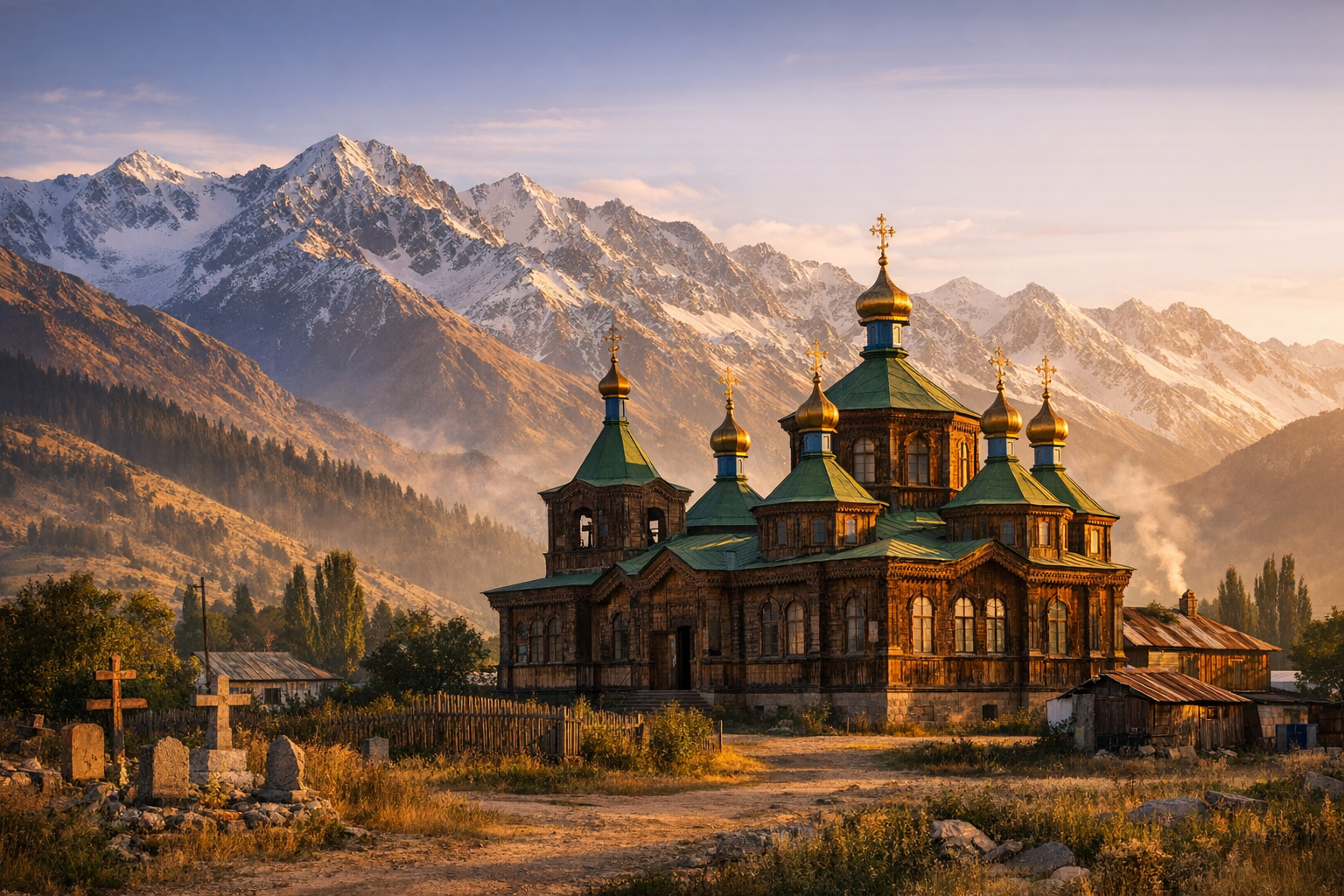
The Historical and Cultural Essence of Holy Trinity Church in Karakol
Nestled in the picturesque town of Karakol, the Holy Trinity Russian Orthodox Church stands as a testament to Kyrgyzstan's layered history and cultural diversity. Built at the end of the 19th century, this wooden structure reflects the resilience and spiritual dedication of local communities, layered over decades of historical shifts and changes. Its architecture, characterized by traditional Russian wooden church design, is a magnificent example of ecclesiastical craftsmanship that has withstood natural and political challenges over the years.
Karakol, located near the eastern tip of Lake Issyk-Kul, served as an important crossroad not only for merchants but also for cultures and religions. The construction of the Holy Trinity Church came during the expansion of the Russian Empire into Central Asia, bringing about a convergence of Russian Orthodox Christianity with Kyrgyz nomadic traditions. As a result, the church stands as a cultural fulcrum where the echoes of Russian settlers meet the enduring heartbeat of Kyrgyz cultural practices.
The church's history is intricately tied to the global changes of the 20th century, surviving the upheavals of Revolution and Soviet suppression of religion. During Soviet rule, the church was repurposed, at times being used as a dance hall. However, the spirit of the place remained intact, and in the post-Soviet era, it was restored to its religious roots, becoming a beacon of spiritual renewal for both locals and tourists.
Visiting the Holy Trinity Orthodox Church is not merely about architectural admiration. It's a journey through time that showcases the interplay of various epochs, religious beliefs, and architectural aesthetics. The church, with its elaborately carved iconostasis and serene wooden interiors, invites introspection and offers a unique glimpse into the religious heritage embedded in the Kyrgyz cultural tapestry. This site is not just an exploration of faith, but a rich narrative woven into the everyday life of Karakol's modern populace.
Planning Your Visit: Logistics, Traditions, and Local Protocols
Visiting the Holy Trinity Church requires more than simply carving out time on your itinerary; it demands respect and understanding of local traditions and cultural etiquette. Karakol is accessible via various modes of transport. From Bishkek, travelers can take a marshrutka or a taxi. The trip, which spans approximately 400 kilometers, typically costs around 400-600 KGS Som depending on your bargaining skills and travel season.
Upon arrival in Karakol, everything from affordable guesthouses to yurt stays immerse you in the local culture. It's crucial to choose a place that aligns with your budget and desired experience. The CBT (Community Based Tourism) offices can assist in finding accommodations ranging from 1,000 to 3,000 KGS Som per night.
When visiting the church, dress modestly to respect the sanctity of the space. Women should cover their heads, and everyone is expected to dress conservatively. The best time to visit is during the summer months, from June to September, when the weather in Karakol is most pleasant and the services are more frequent and accessible to tourists.
Inside the church, etiquette dictates that visitors remain quiet and avoid flash photography to maintain the spiritual ambiance. Being a place of worship, certain areas might be restricted for tourists during services. Understanding basic Russian phrases can be beneficial, as English may not be widely spoken among older locals. Useful phrases include 'Здравствуйте' (Hello) and 'Спасибо' (Thank you), enough to ensure friendly interactions with the churchgoers and caretakers.
When visiting the Holy Trinity Russian Orthodox Church, understand that it is not only a historical site but also an active place of worship that requires respect and decorum. Activities such as photography might be restricted during services, so it's advisable to confirm timings and regulations beforehand.
A trip to Karakol presents an opportunity to explore other cultural and natural sights beyond the church. The close proximity to the Tian Shan mountains offers trekking opportunities while the nearby Dungan Mosque and weekly animal market provide deeper cultural insights.
Engaging with local guides through CBT (Community Based Tourism) offers a more immersive experience of Karakol's cultural landscape. They provide valuable insights into local customs and facilitate interaction with village communities, enriching your understanding of Karakol's rich heritage.
Frequently Asked Questions About Holy Trinity Russian Orthodox Church in Karakol
What is the best time of year to visit the Holy Trinity Russian Orthodox Church in Karakol?
The best time to visit the Holy Trinity Church is during the summer months, from June to September. During this period, the weather in Karakol is mild with temperatures comfortably ranging from 16°C to 24°C (60°F to 75°F), providing ideal conditions for both outdoor exploration and enjoying the church's serene interior. Visitors can also witness or participate in local festivals and services that are more frequent during this time.
How much does it cost to travel from Bishkek to Karakol?
Traveling from Bishkek to Karakol can be achieved by marshrutka or taxi. A marshrutka typically costs around 400 KGS Som per person, while a shared taxi might range from 500 to 600 KGS Som, providing a faster and more comfortable journey. Total travel time is approximately 6 to 8 hours, dependent on traffic and road conditions. Booking in advance is advisable during the peak travel season to secure your seat.
Are there specific dress codes or cultural etiquettes to be aware of when visiting the church?
Yes, when visiting the Holy Trinity Church, it is important to dress modestly. Women are expected to cover their hair with scarves, and both men and women should wear clothing that covers shoulders and knees. Utilizing respectful language, remaining quiet inside the church, and following any additional guidelines provided by church officials are essential to honor the sacredness of the space.
Plan Your Kyrgyzstan Wilderness Expedition
Ready to explore the untamed Tian Shan mountains? Contact the Wild Kyrgyzstan team at wildinkyrgyzstan.com to book your custom guided trek or explore our self-guided expedition itineraries.