Exploring the Dungan Mosque in Karakol: A Masterpiece of Wooden Architecture
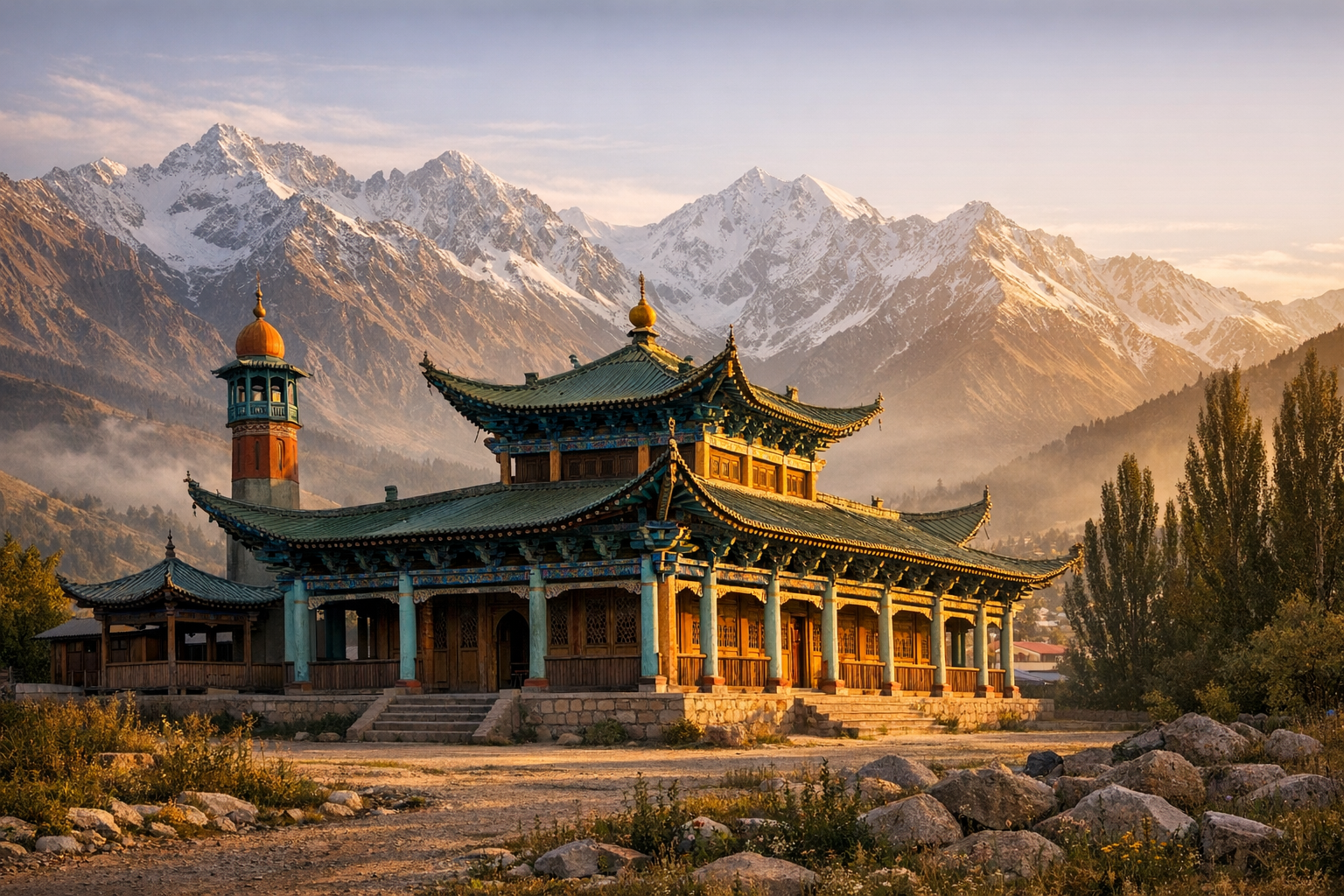
Unveiling the Dungan Mosque: A Cultural Gem in Karakol
Nestled in the foothills of Kyrgyzstan’s majestic Tian Shan mountains, the Dungan Mosque in Karakol stands as a remarkable testament to the fusion of cultures and architectural brilliance. Established in the early 20th century, this mosque was built by the Dungan people, an ethnic group of Hui Chinese Muslims. The mosque’s construction began in 1907 and was completed in 1910, a culmination of the efforts led by the master carpenter Chou Seu and a devoted community. With its intricate wooden architecture, the mosque reflects traditional Chinese style but serves Islamic purposes, symbolizing the blend of spiritual and cultural harmonies.
The Dungans migrated from China’s northwest provinces, escaping political turmoil during the Qing Dynasty. Settling in the fertile regions of Kyrgyzstan, they infused their cultural heritage into local communities, prominently visible in this mosque. In Kyrgyz, the mosque is often referred to as the 'Dungan Mecjit'. Karakol, a city with a rich history interwoven with Russian, Kazakh, and Mongolian influences, provides the perfect backdrop for this architectural marvel. With its distinctive tiered roofs, vibrant colors, and absence of nails in its construction, the mosque is an embodiment of traditional craftsmanship and religious devotion.
From its brilliant red, blue, and green hues that depict harmony and prosperity, to the dragon motifs that guard its entrances, the Dungan Mosque is not just a place of worship but a celebration of artistic expression. The eight pillars supporting its eaves are reminiscent of pagoda structures, yet they embrace Islamic calligraphy. As you approach the mosque’s gates, the sound of prayers resonates, an invitation to explore this sacred space balanced between worlds.
For modern travelers, visiting the Dungan Mosque is a journey into a cultural confluence that few experience. It highlights a unique narrative of migration, adaptation, and artistry. The mosque, with its serene gardens and the backdrop of snow-capped peaks, offers a peaceful retreat for those seeking more than just visual beauty; it provides a spiritual and historical exploration of Kyrgyzstan's diverse cultural landscape.
Navigating Your Visit: Practical Arrangements and Cultural Etiquette
Planning a visit to the Dungan Mosque requires careful consideration of logistics to fully appreciate its cultural and historical essence. Located in Karakol, reaching the mosque is facilitated by a comprehensive network of transport options. The city is accessible via public marshrutkas (shared taxis), which are affordable at approximately 50 KGS Som inside city routes. Buses regularly travel to and from Bishkek, with ticket prices around 500 KGS Som for a 7-hour journey.
Visitors are advised to plan their trip during late spring or early autumn, when weather conditions are most favorable for exploring both the mosque and the surrounding areas. During these periods, temperatures are mild, and the sweeping views of the snow-capped Tian Shan offer a stunning backdrop. No special permits are required to visit the mosque, yet it’s respectful to dress modestly, keeping knees and shoulders covered within sacred spaces.
For an immersive experience, consider engaging with the Community Based Tourism (CBT) initiatives in Karakol. They offer guided tours, which provide in-depth historical insights into the mosque's significance and help bridge cultural interactions. These tours typically cost around 1,000 KGS Som per person, with additional customization options available.
Staying near the mosque offers the chance to immerse in local culture. Accommodations range from budget-friendly guesthouses to authentic yurt stays. At an average of 1,500 KGS Som per night, yurt stays not only provide unique lodging options but also facilitate direct interactions with local customs and traditions. Respecting local etiquette, such as removing shoes before entering the mosque and greeting with the phrase 'Salaam aleikum,' enriches this travel experience significantly.
Karakol’s vibrant cafes and markets offer a glimpse into local life. Try the traditional Kyrgyz drink 'Kumis' made from fermented mare’s milk, available in local dairy markets at around 200 KGS Som per bottle.
Photography inside the mosque is generally discouraged to maintain worshipper's privacy and respect the spiritual ambiance. Ask for permission and follow guidelines shared by local guides.
Understanding local history enhances your visit. Engage with locals to hear oral histories of the Dungan’s migration, typically shared during cultural exchange events or over a hospitable meal.
Frequently Asked Questions About Dungan Mosque Karakol
What makes the Dungan Mosque in Karakol unique?
The Dungan Mosque’s uniqueness lies in its architecture and cultural blend. Built entirely without nails and featuring traditional Chinese motifs alongside Islamic art, it represents the convergence of these cultures. Its vibrant colors, serene gardens, and dragon carvings make it an architectural marvel and a historical symbol of the Dungan community.
How do I get to the Dungan Mosque from Bishkek?
From Bishkek, you can take a regular bus or marshrutka, with buses departing from Bishkek’s Western Bus Station. The journey takes approximately 7 hours, with costs around 500 KGS Som. Plan your trip in advance and consider weekdays to avoid crowded weekends.
What are the visiting hours and costs to enter the mosque?
The mosque is open to visitors from 9:00 AM to 7:00 PM. There is typically no entrance fee, but a small donation is appreciated to assist with maintenance. It’s advisable to check local festival schedules in Karakol, as these might affect visiting hours.
Plan Your Kyrgyzstan Wilderness Expedition
Ready to explore the untamed Tian Shan mountains? Contact the Wild Kyrgyzstan team at wildinkyrgyzstan.com to book your custom guided trek or explore our self-guided expedition itineraries.